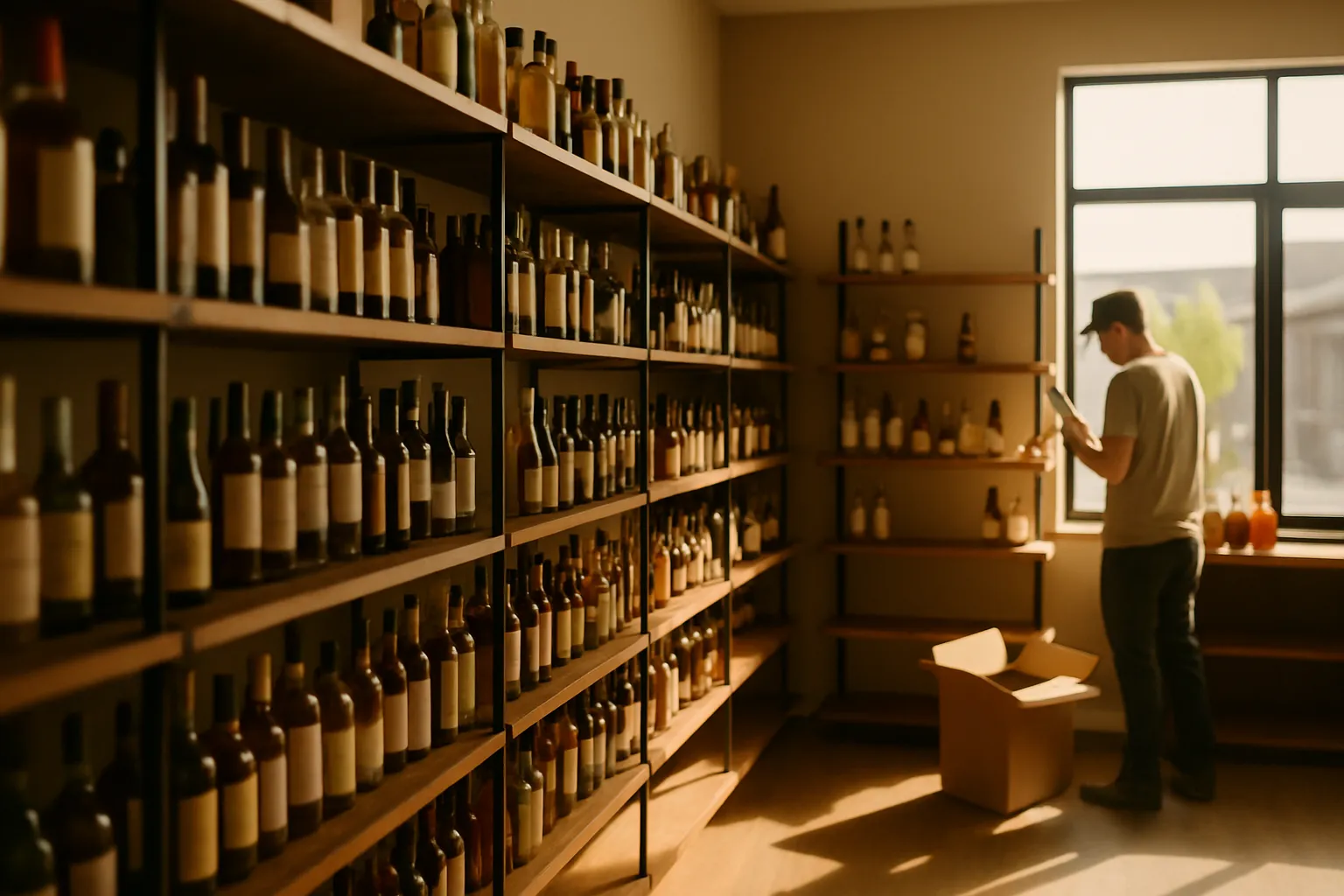
Opening a liquor store costs real money and takes longer than most people expect. Budget $50,000 to $150,000 or more depending on your state, location, and whether you're building out a space or buying an existing store. The licensing process alone can take six months to a year in many states. Here's exactly what to work through, in order.
How to Open a Liquor Store: The Full Process
1. Research Your State's Liquor Laws First
Liquor retail is one of the most regulated industries in the country, and the rules vary dramatically by state. Some states run a control system where the state sells spirits directly. Others are open-license states where private retailers compete freely. A few counties and municipalities are still dry.
Before you spend a dollar on a location or a business plan, contact your state liquor authority and ask:
- Is retail liquor licensing available in the county and municipality you're targeting?
- Is there a license cap or quota based on population?
- What license types exist (beer and wine only, full spirits, off-premise, on-premise)?
- What are the current application fees and timelines?
- Are there proximity restrictions to schools, churches, or other retailers?
Every rule in this section should be confirmed with your state liquor authority. This is not legal advice.
2. Write a Business Plan With Real Numbers
A business plan isn't just for a bank loan. It forces you to stress-test the numbers before you sign a lease.
Work through these line items:
- Startup costs: license fees, buildout or leasehold improvements, fixtures, refrigeration, initial inventory, signage, POS system, security system, and working capital reserve.
- Monthly fixed costs: rent, utilities, insurance, payroll, and software subscriptions.
- Monthly variable costs: cost of goods, card processing fees, supplies.
- Revenue projection: estimated monthly sales based on foot traffic, local competition, and store size.
Worked example: A store projecting $80,000 in monthly sales at a 28% gross margin generates $22,400 in gross profit. If fixed and variable costs run $18,000 a month, net operating income is $4,400 before taxes and debt service. Run this math at conservative, base, and optimistic sales levels so you know your break-even point.
For more on what realistic margins look like, see Liquor Store Profit Margins in 2026.
3. Choose and Secure Your Location
Location drives volume more than almost any other factor. Look for:
- High vehicle or foot traffic with easy parking
- Proximity to residential neighborhoods, restaurants, or event venues
- Visibility from the street
- Adequate square footage for your product mix (a full-service store typically needs 1,500–4,000 sq ft)
- Zoning approval for alcohol retail — confirm with your city or county before signing anything
Get a letter of intent, not a signed lease, until your license application is approved or at least conditional. Some landlords will negotiate this. If the license is denied and you're locked into a lease, that's a serious problem.
4. Form Your Business Entity and Open a Business Bank Account
Most owners use an LLC or corporation for liability protection. Talk to a business attorney or CPA in your state about the right structure and tax treatment. This is not legal or tax advice — get qualified counsel.
You'll need:
- State business registration
- Federal EIN (Employer Identification Number) from the IRS
- Business checking account
- Any required local business licenses separate from the liquor license
5. Apply for Your Liquor License
This is the longest step. Most state applications require:
- Completed application forms
- Personal background checks for all owners above a threshold ownership percentage
- Proof of business entity and EIN
- Lease agreement or proof of property ownership
- Floor plan of the retail space
- Application fees (these vary widely by state and license type — confirm current fees with your state authority)
- Public notice posting in some states
File everything correctly the first time. Incomplete applications restart the clock. If your state allows it, hire a licensing consultant who knows your state's process.
6. Build Out and Stock the Store
While your license is processing, you can usually work on the physical space. Priorities:
- Shelving, gondolas, and refrigeration units
- Security cameras and alarm system (often required by your insurer and sometimes by the license)
- Signage, inside and out
- Point-of-sale station placement — near the entrance, with clear sightlines
- Age-verification workflow (your POS should handle this at the register)
Build your initial inventory order around your projected product mix. Most stores stock spirits, wine, and beer across a range of price points. Start with proven sellers and leave open-to-buy budget for reorders in the first 60 days once you see what actually moves.
For a deeper look at managing inventory once you're open, see Liquor Store Inventory Management.
7. Set Up Your POS System Before You Open
Your point-of-sale system isn't something to figure out on opening day. It needs to be running, tested, and loaded with your inventory before the first customer walks in.
A liquor store POS needs to handle things a generic retail system doesn't:
- ID scanning for age verification at the register
- Inventory tracked by bottle and by case
- Purchasing and receiving from distributors
- Shelf label printing when prices change
- Employee permissions so staff can't override prices or access reports they shouldn't see
- Sales reports broken down by category, time of day, and employee
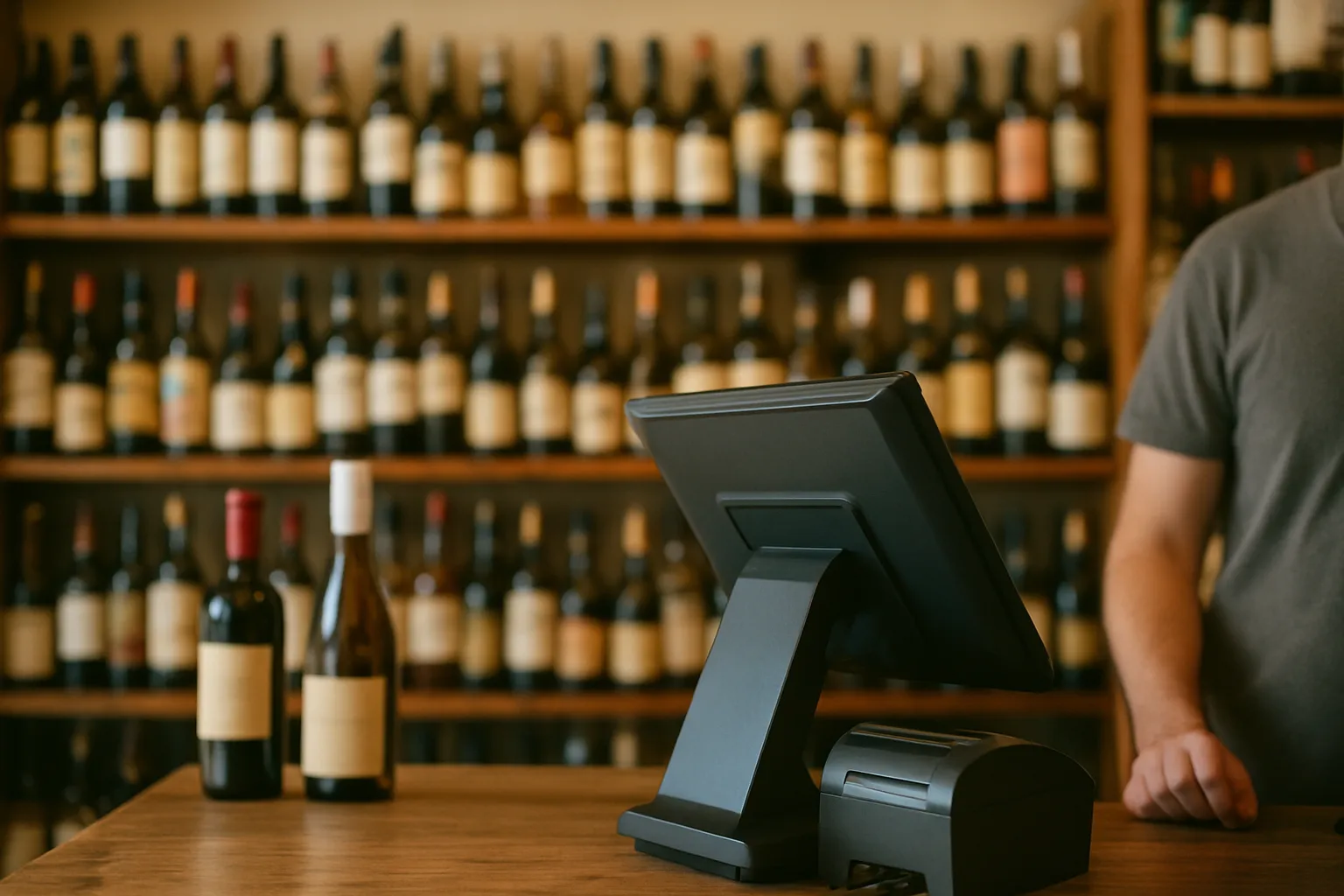
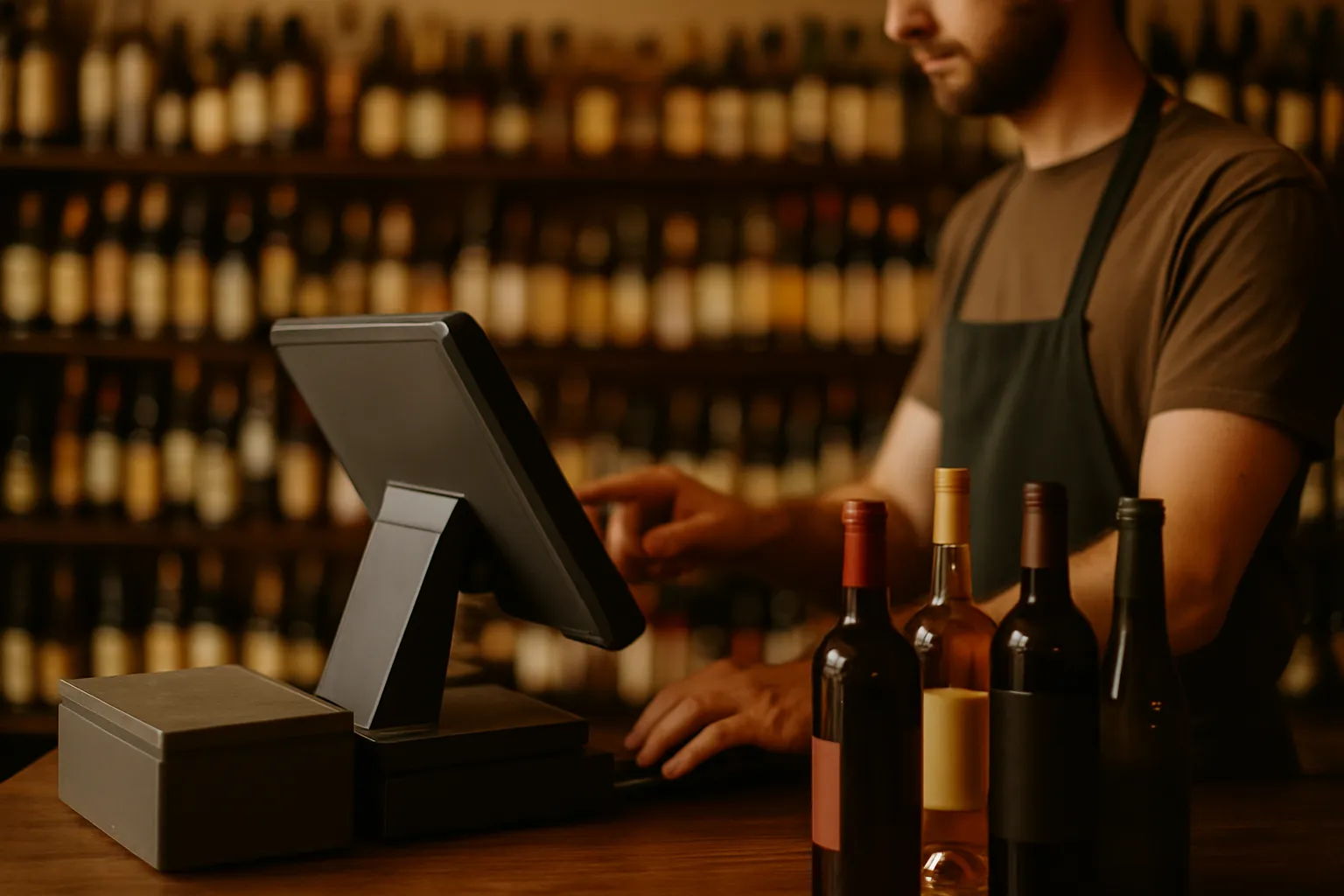
LiquorStoreOS ships as a complete station — touchscreen register, card reader, receipt printer, cash drawer, and scanner — with your inventory already loaded before it arrives. That means you're not spending opening week entering SKUs by hand. See what's included and visit the full features list to check it against your requirements.
8. Understand Card Processing Costs
Card fees are a real operating cost. Plan for them.
Worked example: A store doing $70,000 a month in sales with 75% paid by card runs $52,500 through card networks. At a 3% effective rate, that's $1,575 a month — $18,900 a year — going to processing fees.
A cash discount program lets you offset that cost by pricing for cash and adding a service fee for card transactions at the register, where state rules allow it. LiquorStoreOS has a cash discount program built in. Before you use it, confirm it's permitted in your state. See how the cash discount works for details.
9. Hire and Train Staff
Most small liquor stores run with one to three employees on the floor at a time. Before anyone works a register:
- Train on your state's ID-check requirements — confirm the rules with your state liquor authority
- Set employee permissions in your POS so each role has access only to what it needs
- Review your store's refusal-of-sale policy in writing
- Check whether your state requires seller/server training certification
10. Open and Measure From Day One
The first 90 days tell you a lot. Track:
- Daily and weekly sales by category
- Inventory shrink (what's selling versus what's leaving the shelf)
- Average transaction size
- Peak hours and staffing needs
Your POS reports should make this straightforward. If you're pulling this data manually from a spreadsheet, you're spending time you don't have.
Quick-Reference Checklist
| Phase | Key Tasks |
|---|---|
| Research | Confirm license availability, state rules, dry zones |
| Planning | Business plan, break-even analysis, entity formation |
| Location | Letter of intent, zoning confirmation, proximity rules |
| Licensing | Application, background checks, fees, public notice |
| Buildout | Fixtures, refrigeration, security, signage |
| Technology | POS installed and tested, inventory loaded, ID scanning active |
| Staffing | Hired, trained on ID checks and POS, permissions set |
| Opening | Soft open, track daily sales, adjust inventory orders |
The stores that struggle in year one usually skipped the planning phase or underestimated how long licensing takes. Give yourself more runway than you think you need, and get your systems in place before you open the doors.
If you're ready to look at POS options, see which option fits your store.