Getting a liquor license in Ohio means applying through the Ohio Division of Liquor Control (DOLC). The type of license you need, what it costs, and how long it takes depend on what you're selling, where your store is, and whether a quota permit is available in your county. Plan for a process that can take 60 to 120 days or longer, and budget for permit fees, legal fees, and the cost of a quota permit on the open market if one isn't available from the state. Confirm every detail with the DOLC or a licensed Ohio attorney before you act — rules change and local conditions vary.
What Type of Liquor License Does a Retail Liquor Store Need in Ohio?
Most independent liquor stores in Ohio operate under a D-6 permit (carryout sales of beer, wine, and spirits for off-premises consumption). You'll likely also want a D-8 permit to sell wine and mixed beverages, and a D-1 or D-2 if you want to include beer. In practice, most full-service liquor stores hold a combination of D permits that covers all categories. The DOLC's permit type guide is the definitive source — check it before you assume which permits your location requires.
Ohio also separates spirits sales from beer and wine sales at the permit level, which is different from many other states. Spirits in Ohio are sold through state-controlled agency stores or licensed carry-out permit holders, so confirm exactly which permit class applies to your model.
Quota Permits: The Biggest Obstacle for New Ohio Stores
Ohio limits the number of D-6 (and certain other) permits in each county based on population. These are called quota permits. When the quota is full — which it often is in populated counties — you can't get a new permit from the state. You have to buy one from an existing holder on the open market.
Quota permit prices vary widely by county and market conditions. In high-demand markets they can run well into six figures. In rural counties with open quota slots, you may be able to obtain one directly from the state at the standard fee. Check current quota availability by county on the DOLC website before you plan your budget.
Key point: The cost of the permit itself is often the largest single line item in opening an Ohio liquor store — larger than equipment, build-out, or initial inventory in some markets. Don't underestimate it.
Ohio Liquor License Fees (State-Set Permit Fees)
State permit fees are set by the DOLC and are separate from what you'd pay to acquire a quota permit on the secondary market. Fees vary by permit class and are subject to change. The table below shows the general structure — verify current amounts directly with the DOLC before budgeting.
| Permit Type | What It Covers | Where to Confirm Fee |
|---|---|---|
| D-1 | Beer (carryout) | DOLC permit fee schedule |
| D-2 | Beer and wine (carryout) | DOLC permit fee schedule |
| D-6 | Beer, wine, and spirits (carryout) | DOLC permit fee schedule |
| D-8 | Wine and mixed beverages | DOLC permit fee schedule |
Annual renewal fees are also required. Build both the initial fee and annual renewals into your operating budget.
Step-by-Step: How the Ohio Liquor License Application Works
- Determine which permits you need. Use the DOLC permit finder or consult an Ohio liquor license attorney. Don't guess — the wrong permits mean you can't sell certain products legally.
- Check quota availability in your county. If quota is open, you apply directly to the DOLC. If not, you need to find a seller on the secondary market and transfer the permit.
- Secure your location first. Ohio requires a fixed address on the application. You'll need a lease or ownership agreement in place.
- Check local zoning. Your municipality or township must allow a liquor carry-out at your address. Some jurisdictions have distance requirements from schools, churches, or other permit holders. Confirm with local zoning before signing a lease.
- Complete the DOLC application. You'll need personal background information for all owners with a significant stake, financial disclosures, your premises diagram, and your lease or deed. The DOLC application portal is online.
- Post public notice. Ohio requires you to post notice of your application at the premises and may require newspaper publication. The DOLC will tell you the exact requirement for your permit type.
- Wait for investigation and approval. The DOLC investigates the applicants and premises. Local law enforcement and the municipality may weigh in. This stage is where timing gets unpredictable — 60 days is optimistic; 90 to 120 is common.
- Pay fees and receive your permit. Once approved, pay the applicable fees and post your permit at the premises as required by law.
Common Reasons Ohio Liquor License Applications Are Delayed or Denied
- Zoning doesn't permit a liquor carry-out at that address
- Location is too close to a school, church, or another licensed premises (distance rules vary by jurisdiction — confirm locally)
- Background issues with an owner or investor holding a significant interest
- Incomplete or inconsistent application paperwork
- Outstanding tax liens or legal judgments against an applicant
- Local government or community objection during the public notice period
Fixing any of these after submission adds weeks or months. Do the homework before you file.
Transferring an Existing Ohio Liquor Permit
If you're buying an existing liquor store, the seller's permit does not automatically transfer to you. You apply for a permit transfer through the DOLC. The process still involves a background investigation and approval — it's not a simple name change. Factor transfer timeline into your purchase agreement and closing date. An attorney familiar with Ohio liquor license transfers is worth the cost here.
Once You Have the License: Running the Store Compliantly
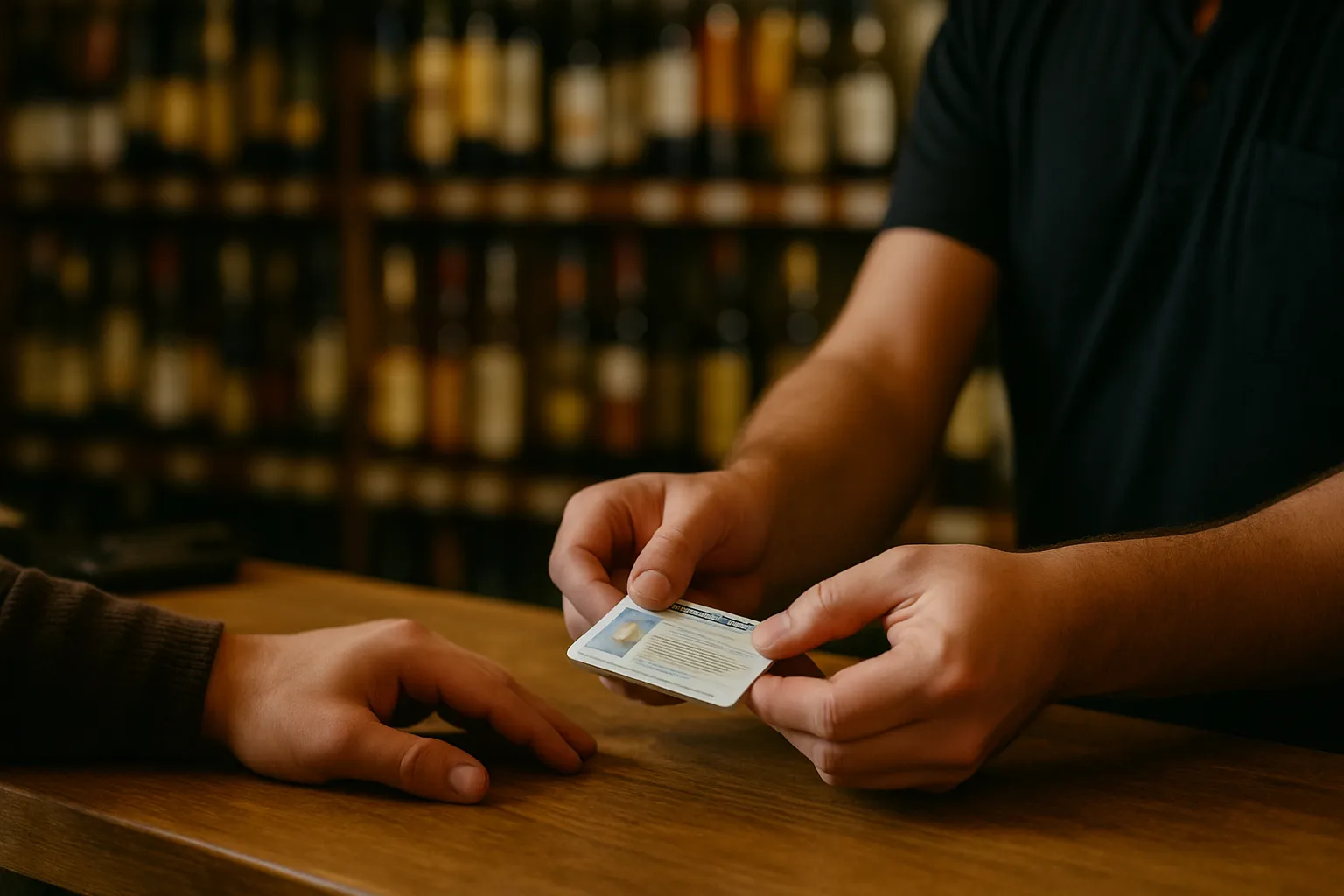
Your permit comes with ongoing obligations. Age verification is the one that can cost you the license if you get it wrong. Ohio law requires you to verify the age of anyone who appears to be under a certain age — confirm the current threshold with the DOLC. A failed compliance check (a state-run sting operation) can result in fines, suspension, or revocation.
This is where your point-of-sale setup matters. LiquorStoreOS has ID scanning built in — the register prompts for ID and logs the scan, so you have a record that the check happened. That's not a legal defense on its own, but it's far better than relying on memory or a handwritten log.
The system also tracks inventory by bottle and case, which matters for DOLC compliance reporting and for catching shrink before it gets out of hand. See what's included with a LiquorStoreOS station if you're setting up a new store or replacing aging equipment.
Card Fees After You Open
Once you're licensed and open, card processing fees become a real operating cost fast. Example: a store running $80,000 a month in card sales at 3% pays $2,400 a month — $28,800 a year — in fees. LiquorStoreOS has a cash discount program built in that lets you offset those fees at the register where Ohio rules allow. Confirm what's permissible in your situation with a payments or legal advisor before you enable it.
Resources to Confirm Everything
- Ohio Division of Liquor Control (DOLC): com.ohio.gov/divisions/liquor-control — permit types, fees, quota availability, application portal
- Your local zoning office: for distance requirements and permitted use at your address
- An Ohio liquor license attorney: especially for quota permit purchases or transfers — the secondary market has real legal complexity
If you're still in the planning stage, our guide How to Open a Liquor Store in Ohio covers the full picture beyond just the license.
When you're ready to think about the register side of the business, see which LiquorStoreOS option fits your store.